
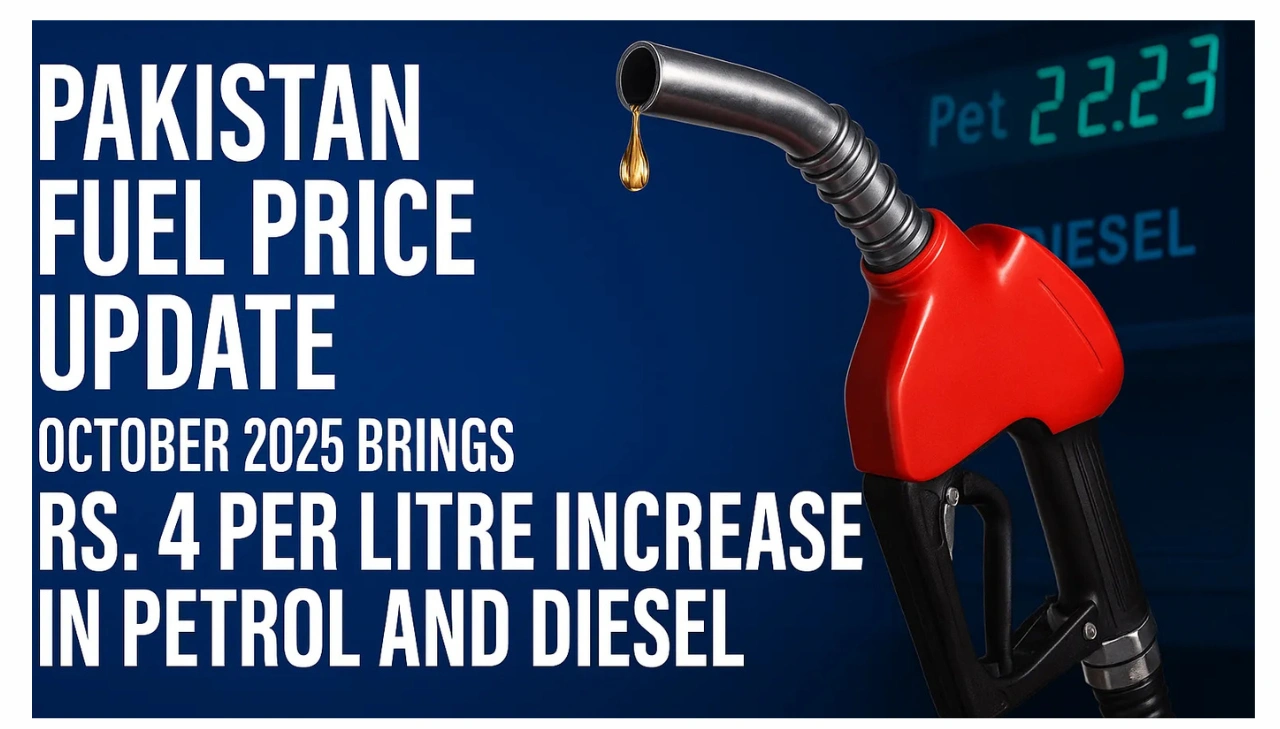
The government of Pakistan has once again raised petrol and diesel prices, bringing new challenges for citizens already facing high inflation. The latest increase, announced on 30 September 2025, came into effect from 1 October 2025 and will remain valid for the first half of the month. The adjustment was made following recommendations from the Oil and Gas Regulatory Authority (OGRA) and related government departments.
New Petrol and Diesel Prices in Pakistan (October 2025)
According to the official notification from the Finance Division, both petrol and diesel prices have gone up by over Rs. 4 per litre. Here are the latest rates:
| Fuel Type | Old Price (Sept 2025) | New Price (Oct 2025) | Increase |
|---|---|---|---|
| Petrol (MS) | Rs. 264.61 | Rs. 268.68 | +Rs. 4.07 |
| High-Speed Diesel (HSD) | Rs. 272.77 | Rs. 276.81 | +Rs. 4.04 |
This revision affects everyone — from daily commuters and transporters to businesses that depend on logistics and fuel-based operations.
Why Fuel Prices Have Increased
Fuel prices in Pakistan are reviewed every 15 days. OGRA determines the rates after analyzing international oil prices, the Pakistani rupee’s exchange rate, and domestic tax policies. The latest hike in October 2025 is mainly due to:
-
Rising global crude oil prices, driven by supply disruptions and geopolitical issues.
-
Depreciation of the Pakistani Rupee, which increases the cost of imported petroleum.
-
Higher refining and transportation costs.

-
Government taxes and levies, which remain a significant part of the total price.
In short, this increase reflects both international market pressures and local economic realities.
Impact on Daily Life and Economy
Every increase in petrol or diesel prices directly impacts Pakistan’s economy and daily life. The October 2025 hike is no different.
-
Public Transport: Fares for rickshaws, buses, and taxis are likely to rise.
-
Groceries and Essentials: Diesel price hikes raise transportation costs, which in turn affect food and goods prices.
-
Electricity Bills: Higher furnace oil and diesel costs can lead to expensive electricity.

-
Household Budgets: Families will need to adjust spending to manage the extra expense.
Because diesel is used in agriculture and freight transport, its price rise has a wider inflationary impact compared to petrol.
Government’s Response and Future Plans
Officials say the government cannot maintain fuel subsidies because of limited resources and growing fiscal pressure. However, the administration, led by Chief Minister Maryam Nawaz, has expressed its commitment to developing renewable energy sources — including solar, wind, and hydro power — to reduce dependence on imported fuels.
These long-term initiatives aim to stabilize the energy sector and make fuel prices less vulnerable to global fluctuations.
Tips to Manage Fuel Costs
As prices rise, smart budgeting and efficient use of fuel become essential. Here are a few practical steps households can take:
-
Plan Trips Wisely: Combine errands and reduce unnecessary travel.

-
Use Fuel-Efficient Vehicles: Consider motorbikes, small cars, or hybrid options.
-
Carpool or Share Rides: Ideal for school, office, or market visits.
-
Maintain Vehicles Regularly: Well-maintained engines consume less fuel.
-
Switch to Public Transport: Metro, buses, and trains are cost-effective alternatives.
Small lifestyle adjustments can save thousands of rupees every month.
Will Prices Decrease Soon?
Fuel prices in Pakistan depend on two key factors:

-
Global crude oil prices
-
The rupee’s exchange rate against the U.S. dollar
If global oil markets stabilize and the rupee strengthens, there may be minor relief in future revisions. However, analysts believe fuel price fluctuations will continue through the end of 2025 due to global uncertainty and domestic fiscal challenges.
Conclusion
The October 2025 fuel price hike highlights Pakistan’s ongoing struggle with global energy trends and local economic pressures. With petrol now at Rs. 268.68 per litre and diesel at Rs. 276.81 per litre, households and businesses must adapt to rising costs.
While the government works toward long-term energy reforms, individuals can mitigate the impact by practicing fuel efficiency, smarter budgeting, and adopting cost-saving habits.
Until then, keeping track of OGRA’s fortnightly updates remains essential for anyone managing expenses in an increasingly fuel-dependent economy.
